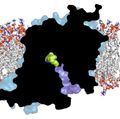
Treating addiction: Cryo-EM technology enables the ‘impossible’ By Erik Robinson April 24, 2019 Research led by OHSU scientists opens avenues for creating medications to treat addiction.
OHSU extends condolences to the Monfries family By Danny Jacobs, M.D., M.P.H., FACS April 23, 2019 Sydney Paige Monfries, a senior at Fordham University, passed away on Sunday, April 14, 2019.
Study shows promise in repairing damaged myelin By Erik Robinson April 18, 2019 OHSU researchers collaborate on potential ‘game-changer’ for people with multiple sclerosis.
Study challenges accuracy of clinical blood lead level screening tools By Tracy Brawley April 16, 2019 Evidence review leads to updated U.S. Preventative Services Task Force screening recommendations for asymptomatic children, pregnant women.
New patient-designed facilities open on Portland’s South Waterfront By Amanda Gibbs April 12, 2019 OHSU’s Center for Health & Healing Building 2 and the Gary & Christine Rood Family Pavilion offer an innovative approach to patient and family experience.
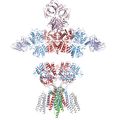
Crucial ‘electrical switch’ in brain revealed in study published by Science By Erik Robinson April 11, 2019 Native structure of a receptor may lead to finding the mechanism behind conditions like Alzheimer’s disease.
Two new patient-centered facilities will open on Friday, April 12 April 10, 2019 MEDIA ALERT: Ribbon-cutting event, followed by tours of the Center for Health & Healing Building 2 and the Gary & Christine Rood Family Pavilion.
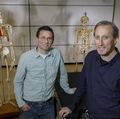
Body donor’s rare anatomy offers valuable lessons By Franny White April 08, 2019 99-year-old rural Oregonian may have been the oldest-known person with rare, life-threatening condition.
Heavy alcohol use stunts adolescent, young adult brain growth By Erik Robinson April 01, 2019 OHSU study is first to pinpoint a decrease in brain volume, potentially limiting lifetime learning ability.
New questions about the tradeoffs in ‘accelerated’ cancer drug studies By Joe Rojas-Burke April 01, 2019 Cancer clinical trials that use surrogate endpoints end up saving relatively little time, a new study finds.