A drug that works by targeting and blocking some of the body’s chemical messengers, which can become overactive in allergic reactions, shows promise in reducing symptoms caused by a severe form of eczema.
A study published in the March issue of the journal Health Affairs suggests Oregon’s experimental approach to Medicaid delivery is a viable way to control overall coverage costs.
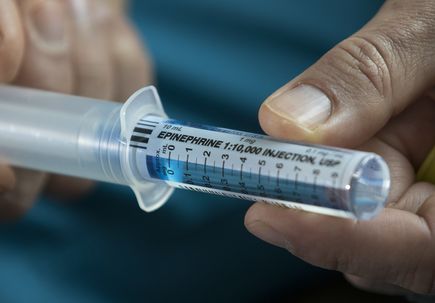
A new study reveals that administering epinephrine via a prefilled epinephrine syringe designed for adults, can result in inaccurate dosing for pediatric patients.
A powerful class of antibiotics provides life-saving relief for people with cystic fibrosis; however, a new study for the first time reveals the levels at which high cumulative dosages over time significantly increases the risk of permanent hearing loss in these patients.
Research published today in the journal Oncotarget, sought to better understand one “typo” in a standard leukemia assay, or test. While studying cancer biology and completing his doctorate at the OHSU Knight Cancer Institute, Kevin Watanabe-Smith, Ph.D., encountered a new problem: an issue with the model system itself.
Between morning sickness and lack of sleep, it may be the last thing pregnant women want to do, but research conducted at OHSU shows exercise in pregnancy pays off.
Commenting on recent research findings from a team at Stanford University, Sancy Leachman, M.D., Ph.D., director of the OHSU Knight Cancer Institute’s Melanoma Research Program and chair of the Department of Dermatology in the OHSU School of Medicine, co-authored a Nature News and Views perspective that heralded artificial intelligence, or AI, an important step in the “final frontier” in cancer diagnosis.
U.S. taxpayers spent more than $650 million in 2013 and 2014 on one medication with questionable usefulness prescribed by less than 1 percent of clinicians, according to new research by scientists with OHSU and the OHSU/Oregon State University School of Pharmacy in Portland.
OHSU scientists have uncovered a method for quickly and efficiently mapping the genome of single cells within the body. Their findings, published Jan. 30 in the journal Nature Methods, clears the way for a significant advance in precision medicine, including cancer and many other disease areas.