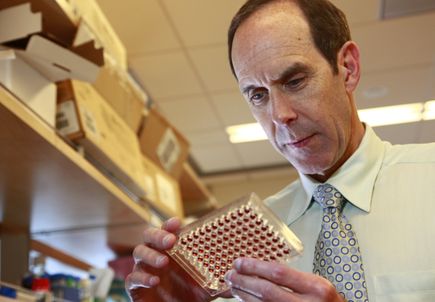
Stephen Lloyd's recent research, published in the Proceedings of the National Academy of Sciences, drew upon his expertise as a cancer biologist and focused on a global health problem affecting hundreds of thousands of individuals in Southeast Asia and Sub-Saharan Africa, where a specific class of toxic compounds, called aflatoxins, are commonly found in food sources.
A study published in the journal Circulation shows that injecting microbubbles into the blood streams of mice and human subjects and then performing an ultrasound on a leg can increase blood flow, which could promote healing and save limbs from amputation.
A first-of-its-kind study, published online in The Gerontologist, has identified multiple levels of mother-daughter relationship styles that may help improve in-home caregiving scenarios.
Research published online in the journal Endocrinology found that a small synthetic molecule initially developed to lower cholesterol may slow or stop the devastating progression of the neurodegenerative disease adrenoleukodystrophy, or ALD. The study was conducted in a mouse model, but planning is under way for a human clinical trial.
There’s an urgency in Anupriya Agarwal’s voice when she talks about her acute myeloid leukemia research: “We need to do something beyond what we’ve already done,” she said. “The treatment hasn’t changed in decades, and that can’t be our only answer.”
Vinay Prasad, M.D., M.P.H., has been awarded a $2 million grant to support an effort to uncover treatments and tests that are contradicted by reliable evidence. The three-year project calls for sharing the findings via a public website and developing teaching modules that can be incorporated into medical school or residency curricula.
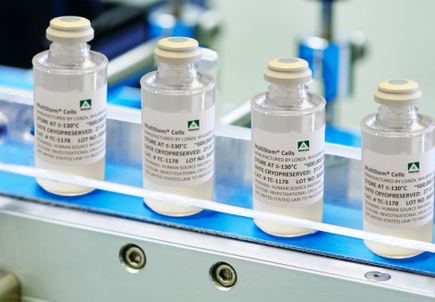
Stroke medication currently available must be given within three hours to have the maximum benefit, but many patients do not make it to the hospital in time to receive it. A newly developed potential treatment involving the use of stem cells to promote brain recovery may greatly extend this window.
The Zika virus attacks tissues in the nervous system, male and female reproductive and urinary tracts, muscles, joints and lymph nodes, and persists for at least 35 days, according to a study conducted in a nonhuman primate model by a multidisciplinary team of researchers at OHSU in Portland, Oregon.
The New England Journal of Medicine published results from a nearly 11-year follow-up study, that showed an estimated overall survival rate of 83.3 percent. According to the National Cancer Institute, prior to Gleevec’s 2001 FDA approval, fewer than 1 in 3 CML patients survived five years past diagnosis.