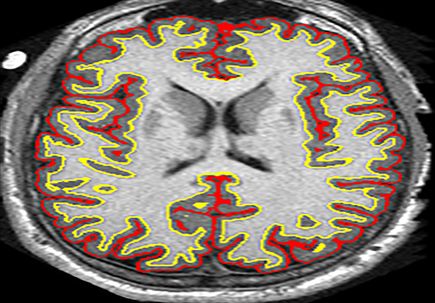
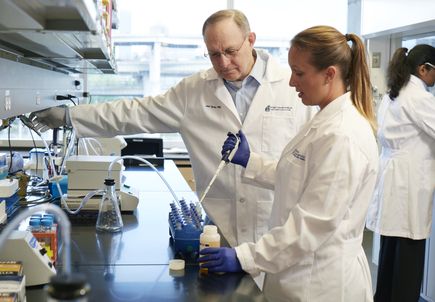
An OHSU pilot study suggests the over-the-counter antioxidant lipoic acid holds promise in improving the lives of patients with secondary progressive multiple sclerosis.
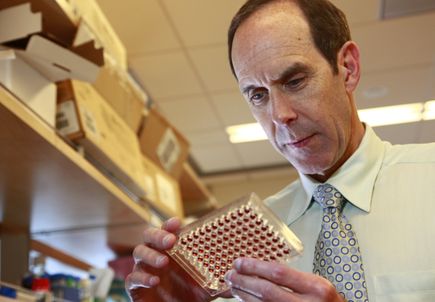
The Office of Cancer Clinical Proteomics Research (OCCPR) at the National Cancer Institute (NCI) announced the institutes that will comprise the Proteogenomic Translational Research Centers, a group created to collaborate with NCI-sponsored clinical trials.
Today the OHSU Knight Cancer Institute announced that internationally renowned bioengineering and technology expert Mike Heller, Ph.D., will join the institute’s Cancer Early Detection Advanced Research Center, or CEDAR, to lead its technology efforts.
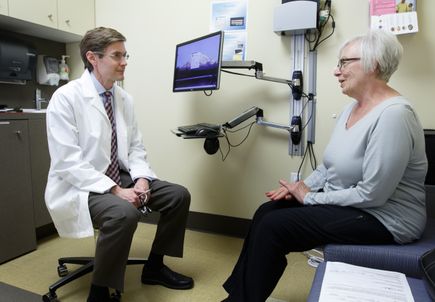
A study of more than 500 cancer survivors found that many years after completing treatment, nearly half of women cancer survivors continued to experience chemotherapy-induced peripheral neuropathy, CIPN.
A systematic review of basic and clinical science research has revealed no definitive standard for detecting military veterans at risk of suicidal behavior, nor is there a clear standard of treatment to prevent suicide among U.S. veterans.
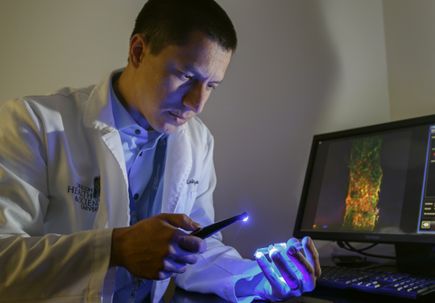
Researchers at OHSU have developed a process to engineer artificial blood vessels which are used to help regenerate teeth, possibly changing the way root canal treatments will be done in the future.
The National Cancer Institute has awarded a research team at the OHSU Knight Cancer Institute $9.2 million over five years to serve as a Research Center in the NCI’s Cancer Systems Biology Consortium, or CSBC.