Mitalipov: Gene mutation repair using CRISPR (2017)
Oregon Health & Science University provides a curated selection of high-resolution photos, video footage, b-roll and graphics for news organizations and media coverage related to OHSU stories. Commercial use is prohibited without prior written consent.
Media usage guidelines
- Photos and video should be credited as “OHSU/Photographer name.”
- Metadata includes captions and usage restrictions.
- Color correction and cropping are allowed. The content or nature of the photo may not be altered.
Questions or requests: Please contact OHSU Strategic Communications at news@ohsu.edu or 503-494-8231.
Germline editing
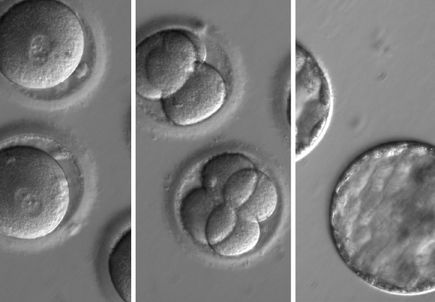
This sequence of images shows the development of embryos after co-injection of a gene-correcting enzyme and sperm from a donor with a genetic mutation known to cause hypertrophic cardiomyopathy. A new study, published today in the journal Nature, demonstrates an effective method of repairing a disease-causing mutation from the moment of fertilization, preventing it from being passed to future generations. (OHSU)

Shoukhrat Mitalipov, Ph.D.
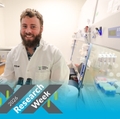
Shoukhrat Mitalipov, Ph.D., (left) talks with research assistant Hayley Darby in the Mitalipov Lab at OHSU, July 31, 2017. (OHSU/Kristyna Wentz-Graff)

Shoukhrat Mitalipov, Ph.D.
Shoukhrat Mitalipov, Ph.D., principal investigator for the Center for Embryonic Cell and Gene Therapy, June 6, 2017. (OHSU/Kristyna Wentz-Graff)

Germline editing team
Shoukhrat Mitalipov, Ph.D., principal investigator for the Center for Embryonic Cell and Gene Therapy (center) with Hong Ma, M.D., Ph.D. (left) and Nuria Marti-Gutierrez, Ph.D., (right) both corresponding authors on a new study outlining a germline repair process. (OHSU/Kristyna Wentz-Graff)
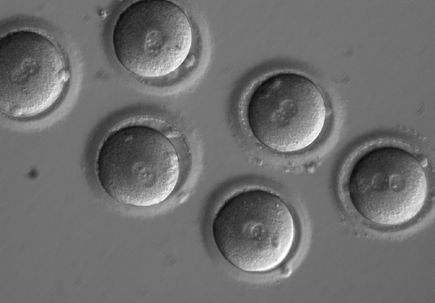
Germline editing: PN 1
This image clearly shows the first sign of successful in vitro fertilization, after co-injection of a gene-correcting enzyme and sperm from a donor with a genetic mutation known to cause hypertrophic cardiomyopathy. (OHSU)
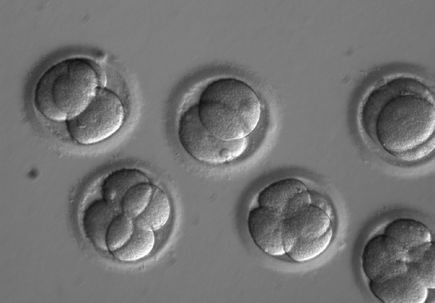
Germline editing: D2-1
This image shows individual blastomeres within the early embryos two days after co-injection. As a result of initiating the repair process at the time of fertilization, a new study revealed that each new cell in the developing embryos was uniformly free of the disease-causing mutation. (OHSU)
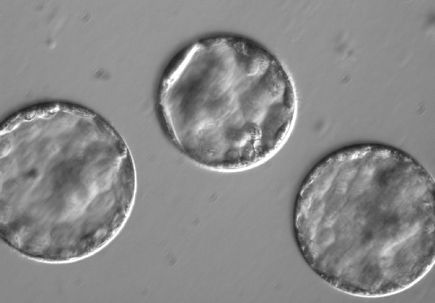
Germline: Blastocyst 3
This image shows embryos after co-injection developing into blastocysts, which could someday be used in fertility clinics to help people trying to have children free of genetic disease. (OHSU)

Shoukhrat Mitalipov, Ph.D.
Shoukhrat Mitalipov, Ph.D., principal investigator for the Center for Embryonic Cell and Gene Therapy, June 6, 2017. (OHSU/Kristyna Wentz-Graff)


Sanjiv Kaul, M.D.
Sanjiv Kaul, M.D., OHSU Knight Cardiovascular Institute chief executive officer; OHSU School of Medicine Division of Cardiovascular Medicine head. (OHSU)

Daniel Dorsa, Ph.D.
Daniel Dorsa, Ph.D., senior vice president for research at OHSU. (OHSU)
VIDEO: Download footage from press conference
Press conference with Shoukhrat Mitalipov, Ph.D., and Sanjiv Kaul, M.D., at OHSU, August 2, 2017. (OHSU)

VIDEO: Download interview footage of Shoukhrat Mitalipov, Ph.D.
Interview footage of Shoukhrat Mitalipov, Ph.D. (OHSU)

VIDEO: Download video footage from the Mitalipov Lab
Footage from Shoukhrat Mitalipov's lab at OHSU. (OHSU)
VIDEO: Download germline editing video
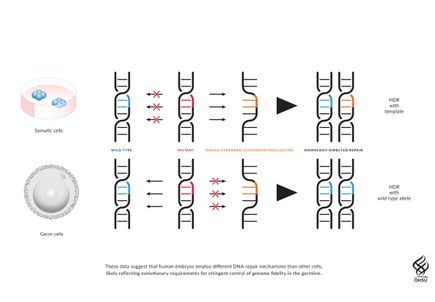
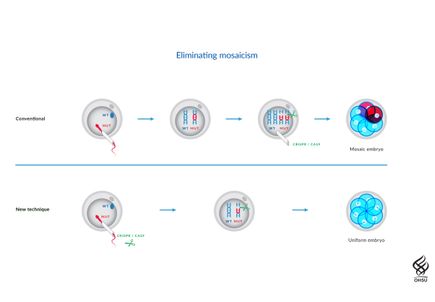
This video shows both S-phase (post fertilization) injection of CRISPR/Cas9 and M-phase co-injection of the CRISPR/Cas9 gene-correcting enzyme and sperm from a patient with a known disease-causing genetic mutation. As a result of initiating the repair process at the time of fertilization (M phase), the new study by OHSU researchers found that mosaicism could be eliminated in the developing embryo and correct the mutation. (OHSU)
- Latest Stories
- Popular