6 ways parents can ensure a safe, healthy school year from home

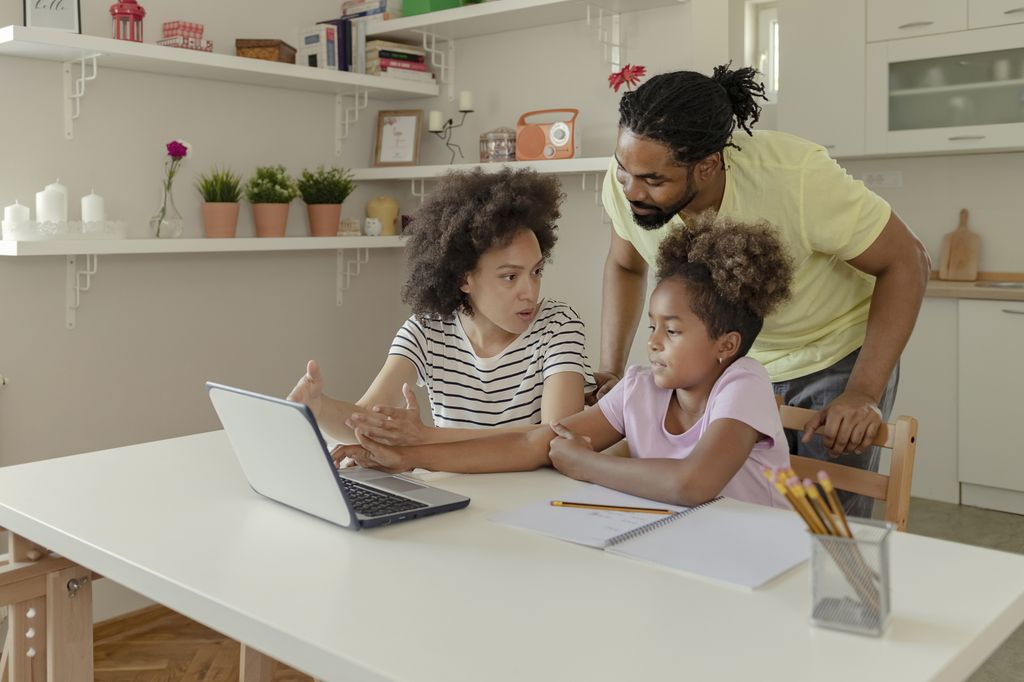
The start of school looks different this year. Instead of a return to the classroom, many students will be working from kitchen tables, home offices or even bean bag chairs.
To help ensure a smooth transition back, for both students and parents, experts from OHSU Doernbecher Children’s Hospital and the OHSU Casey Eye Institute, recommend adding the following to your ‘homework’ list:
Routine, Routine, Routine
- Kids are often creatures of habit, so keeping a specific and attainable routine can be beneficial to your child’s success.
First things first, says Zina Stavitsky, M.D., a resident-physician in pediatrics at OHSU Doernbecher: “If your student is having a hard time getting their summer sleep routine back on track, you can work to adapt their sleep-wake schedule by gradually moving bed times earlier, even just 15 minutes, each night until you reach your desired schedule.”
While most kids will be learning from the comforts of their own home, Stavitsky also suggests trying to keep the same routine each day, similar to what would be done in a normal school routine:
- Set the same wake-up time each morning.
- Eat breakfast, brush teeth and bathe, as normal.
- Get fully dressed! Save the PJs for night time.
- Consider packing a lunch, in your child’s lunch box if they use one.
- And try to start school work at the same time each day.
“The trick is to try to integrate normalcy, even though this school year will start out in a non-traditional way,” she says.
Don’t skip vaccinations or well-child check-ups
According to the Oregon Health Authority, during the first half of this year, Oregon saw a large reduction in the number of vaccines administered to children and adults.
“Vaccines are safe. They are effective, and they protect you from preventable diseases,” says Paul Mitchell, M.D., resident-physician in pediatrics at OHSU Doernbecher. “Although it may feel risky to visit your doctor’s office during the pandemic, it may be even more risky to skip your child’s annual check-up and routine vaccination schedule.”
OHSU Doernbecher – as well as other hospitals, clinics and health departments across the nation – are taking extra precautions to ensure your safety. Be sure to connect with your pediatrician, and get your child’s scheduled vaccination – including influenza -- to prevent unnecessary disease.
“Even though it may seem unlikely that illness will spread when schools are not open, germs are persistent and it is important to be prepared,” says Mitchell.
Nutrition isn’t just for the school cafeteria
As adults, we often eat when we are stressed. We eat when we are bored, and we eat when food is readily available. Kids are no different. And, because the majority of classroom learning will take place at home, the risk of overeating is increased.
How do you keep your kids healthy and out of the snack drawer? Doris Valenzuela-Araujo, M.D., resident-phsycian in pediatrics at OHSU Doernbecher, suggests the following:
- Make healthy snacks – like veggies, fruit or nuts – easily accessible.
- Store sugary treats and snacks out of sight so they won’t be tempting.
- Offer your child water, instead of sugary drinks. Hydration is not only healthy, but drinking water can curb food cravings.
Balance screen time and limit eye strain
For years, parents have tried to follow the golden rule of screen time: no more than two hours per day. With most schools using distance learning models this academic year, the reality is screen time is likely to increase, and that’s OK.
The key, says Stavitsky, is to find a realistic balance between screen time for learning and screen time for fun.
“Make sure to incorporate traditional activities, such as outdoor time, offline reading, or arts and crafts, into your child’s daily schedule. This will help keep you student physically active and emotionally sound,” she says.
Online communities, including social media, texting and multi-player games, do serve as a source of social engagement for many children, particularly now when physical engagement is limited due to physical distancing practices. So, allowing a reasonable amount of time for non-educational screen-time is OK, too, Stavitsky emphasizes.
While there is no clear evidence that using digital screens harms children’s visual development, prolonged screen time can cause digital eye strain, which includes eye discomfort, blurred vision, headaches, and dry or itchy eyes.
To prevent it, Leah Reznick, M.D., a pediatric ophthalmologist at the OHSU Casey Eye Institute and associate professor of ophthalmology in the OHSU School of Medicine, recommends these tips:
- Follow the 20-20-20 rule. For every 20 minutes of screen time, look away from the screen at an object 20 feet away for 20 seconds. Parents can set timers to remind children to look away every 20 minutes.
- Adjust the screen’s brightness and contrast levels to avoid glare, which causes eye strain.
- Maintaining proper posture to prevent neck muscle tightness and headaches.
- Physically step away from the screen occasionally. Evidence suggests that spending time outdoor scan prevent decrease a child’s risk of developing near-sightedness.
Weigh risks and benefits before returning to sports, group activities
For many kids and teens, sports and other extracurricular activities are an important part of life. The decision to return to these activities can be tough, and each family should weigh the risks and benefits for themselves.
Families should consider the following when deciding to return to group activity:
- Re-engaging in sports and other activity with friends has both physical and psychological health benefits for children, but does pose a risk of COVID-19 infection.
- If families do choose to participate in group activities, face coverings should be worn at all times when not vigorously exercising.
- All individuals with exposures to COVID-19, regardless of symptoms, require a minimum two-week resting period without exercise or competition and those with symptoms should have at least a two- to four-week restriction from exercise and competition. Because of the limited information on COVID-19 and exercise, the American Academy of Pediatrics strongly encourages that all patients who have had COVID-19 be cleared for participation by their primary care physician.
Make mental health a priority
The pandemic has impacted everyone. Fear or worry of your own health, or the health of loved ones; financial strain; job status. It’s a lot to deal with. While our focus tends to be on the physical impacts of COVID-19, it is equally important that we protect our mental health.
“The good news is, kids are resilient,” says Alex Burford, M.D., resident-physician in pediatrics at OHSU Doernbecher. “But, they aren’t immune to the impacts of stress, anxiety and unpredictability.”
Burford recommends taking time, as a family to talk each day:
- Discuss what is working well, and what things may need change -- whether it be a new school routine or a need for more social interaction.
- Practice mindfulness. Paying attention to the moment, instead of the past or future, can help kids and adults alike to see things more clearly, to act less impulsively, in the face of chaotic times.
Additionally, he says parents need to take care of themselves, too.
“Parents are being asked to do a lot: cook, clean, provide care, teach, entertain, work. By making sure you, as the parent, are feeling well, both mentally and physically, you will be able to better care of your child. Take breaks, get exercise, ask for help. And remember, you are doing great.”