Why I Teach – Shannon McWeeney, PhD
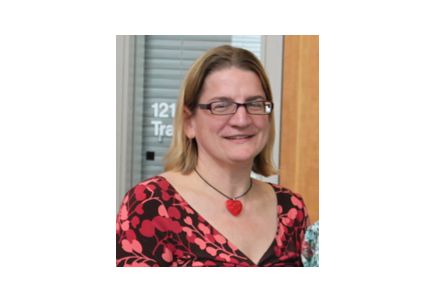
 May’s Q&A features Shannon McWeeney, PhD, Associate Professor, Department of Public Health & Preventive Medicine.
Dr. McWeeney received her PhD in Statistical Genetics from the University of California, Berkeley. At OHSU, she is an Associate Professor of Biostatistics and Bioinformatics in the Division of Biostatistics in the Department of Public Health & Preventive Medicine. She is Head of the Division of Bioinformatics and Computational Biology in the Department of Medical Informatics and Clinical Epidemiology. In addition to her own research group, Dr. McWeeney serves as the Director of both OHSU Knight Bioinformatics and the Oregon Clinical and Translational Research Institute Translational Bioinformatics Program. Her areas of interest in research include: Statistical Genetics, Computational Biology, Network Reconstruction, Statistical Methodology for functional genomics data, data cleaning and data integration
Q&A with Shannon McWeeney, PhD
Your parents were teachers. Can you explain the impact they had on your development?
My parents are both passionate educators, so I was raised in an environment of teaching that went beyond the curriculum from school. They were active in my schooling, sometimes participating in the classroom as guest lecturers. They instilled in me a love for mathematics and science by making studying fun. Learning was often like tearing apart a puzzle, not a chore. It’s a real gift to think of education as part of your exploration and growth. Unfortunately, a lot of people don’t have that type of exposure, so learning becomes that thing they “have to do,” rather than seeing it as an extension of their own development.
What is one of the challenges of 21st century education?
In Bioinformatics and Computational Biology, we’re finding ourselves with the challenge of trying to not only train a new generation of integrated, cross-disciplinary students in biostatistics, genetics and computer science, but also redesigning the paradigm about what that means. Much of the traditional curriculum in any one of those disciplines doesn’t have this inherently multi-disciplinary focus. So it’s not the “us versus them” paradigm, it’s really how best do we integrate this information, and most importantly how best do we communicate across fields. Students are taught from the traditional curriculum what they need in terms of core foundation for mathematics, statistics, genetics and computer science, but we also must teach them how to think critically, communicate their ideas and synthesize.
Do challenges open up new opportunities?
We’re headed toward a new hybrid of multi-disciplinary teaching, full of opportunities in terms of novel curriculum and placing students in co-mentored scenarios. For example, when students are just getting their feet wet in our program, they have a research project in which they’re co-mentored by the bioinformatics faculty as well as a basic scientist or a clinical faculty member. This way they can see both perspectives rather than having it just be the methodology or the science without linking the two together.
How do you keep your teaching current?
I try to bring in a perspective from my research and projects. So if we’re talking about something that can be considered a core design element or principle, I try to bring in what can sometimes be painful postmortem analysis about what went wrong with the project or what we can learn from it, as well as our successes.
Related news:
Dr. McWeeney was one of nine OHSU participants who shaved their heads as part of the annual St. Baldrick's event.
What have you learned from your students?
Our students have diverse backgrounds, come from varied fields, and are in different stages of their career. They draw on their own distinctive backgrounds and offer a unique outlook. Their insight and different perspective is amazing. It can lead to novel insight and often exciting new questions. From a methodology standpoint, because they are coming at it from a different background, sometimes they come up with an alternative way of solving a problem that is novel and really “thinking outside the box.” It’s refreshing and keeps things exciting.
Does the wide-ranging diversity of your students affect how you teach?
My students teach me how to teach better. I try to do an assessment of when things work and when they don’t. Sometimes things work beautifully with one cohort, but don’t work so well with another in terms of dynamics. My interaction with my students teaches me how to listen more, be more adaptive in my teaching style and take into consideration the group or student in front of me.
Can you provide an anecdote that demonstrates why you like to teach?
With the graduate students, there is this joy when we are brainstorming and watching a project unfold. I see the same sense of wonder that drives me in my own research begin to materialize within them and I try to help nurture that. It is a true honor to watch them develop their ideas and their confidence in their own knowledge and capability, which culminates in their own contributions to the field, as well as sharing that work in research talks and publications. Each student is on their own career path and the outcome may be industry or academia. Irrespective, it is a beautiful transformation! It’s a tremendous sense of achievement on a personal level to say that I was a part of their development – even if it’s a small part. It’s one of the strongest reasons why I teach.
Aside from your parents, do you have an influential teacher who helped launch you into academia?
I had an amazing English teacher when I was in high school who taught advanced placement. Her passions were in writing, English and science. Mine were similar, except with more of an emphasis on science. She made me realize that I could have creative aspects across the board and that I didn’t have to stifle what I might do professionally. This came at an important time in my life because I was in the mindset that I was being forced to choose between science and other interests. She helped me realize that it wasn’t necessarily the case, that I could be a scientist and also be creative and not lose my passion for other things. In fact, I’ve found that being more balanced actually allows me to be more focused and creative in my research.
Are good teachers born, or they made?
I think it’s both. Some people have naturally good instincts in relating to people or are very effective communicators, so those aspects are much easier for them when it comes to teaching, allowing them to be more powerful educators. Others may struggle, especially considering that each year a new group of students arrives and teachers must be willing to adapt to this new cohort. However, anyone who is self-aware and responsive can improve on these skills and be a phenomenal teacher, especially if they are passionate about knowledge and have a true sense of wonder.
How do you continue to learn so that you can continue to teach?
To be successful, I think it’s important that teachers are learning in real time. One of the gifts of my field is that I get to ask lots of different questions in many domains – so I’m learning all of the time. I have a hunger for learning and like to solve problems, so you could say that I’m well-suited for my discipline. Also, in my research group, I’m actively mentoring students and postdoctoral fellows and learning from them what’s effective or not.
What advice do you have for people who would like to follow in your path?
It’s essential that you are passionate about what you are doing, especially if you are thinking about this at the faculty level. There are easier paths to take, so it’s important that you are energized by your work, with sharing knowledge and helping others develop. If not, it can become a chore and you’ll burn out. Also, it’s important to find the variant of your work that is sustainable for you. These days there are many modified career paths for you to choose from. For example, being a faculty member at an academic hospital setting is very different than being a professor at a traditional liberal arts college and different from being a staff scientist at an institution or center. So it’s important to process quality of life both academically and personally and decide which choice will be the most fulfilling.